Learn how δ¹³C isotope analysis helps evaluate resveratrol origin, including Polygonum cuspidatum extract, fermentation-derived resveratrol, carbon sources, and ingredient sourcing considerations.
Natural vs. Fermentation-Derived Resveratrol: How δ¹³C Helps Verify Ingredient Origin
Understanding Carbon Isotope Analysis in Resveratrol Sourcing
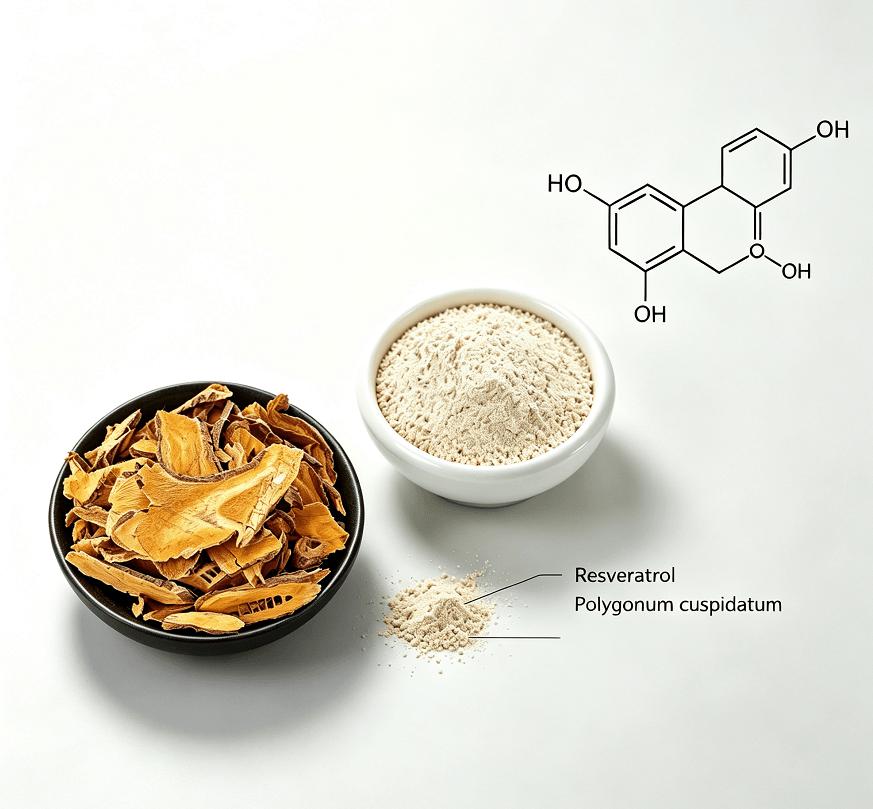
Resveratrol is a naturally occurring polyphenolic compound widely used in dietary supplements, functional ingredients, and cosmetic formulations.
With increasing demand for high-quality botanical ingredients, buyers are paying more attention not only to resveratrol purity and specification, but also to its production origin.
Commercial resveratrol is mainly available through two production routes:
- Botanical extraction from sources such as Polygonum cuspidatum (Japanese knotweed)
- Biotechnology-based fermentation production using microorganisms
Although resveratrol produced by different routes has the same molecular formula and chemical structure, the carbon source behind the molecule may leave different isotopic characteristics.
For ingredient buyers, δ¹³C isotope analysis provides an additional tool to support source evaluation and improve supply chain transparency.
This article explains the difference between natural and fermentation-derived resveratrol and how carbon isotope analysis can assist in ingredient authentication.
1. Why Resveratrol Source Matters for Ingredient Buyers
Resveratrol is widely used as a functional ingredient in:
- Dietary supplements
- Nutraceutical products
- Functional foods
- Beauty and wellness formulations
You can explore our Resveratrol Series for more information about available resveratrol ingredient solutions.
When sourcing resveratrol, buyers often evaluate:
- Purity level
- Trans-resveratrol content
- Raw material source
- Production method
- Documentation support
- Batch consistency
Traditional quality testing methods such as HPLC can accurately measure:
- Resveratrol content
- Purity
- Related compounds
However, chemical analysis alone usually cannot answer one important question:
Where did the carbon atoms in the resveratrol molecule originally come from?
This is where stable isotope analysis provides additional information.
2. Common Production Routes of Commercial Resveratrol
2.1 Polygonum Cuspidatum Derived Resveratrol

Polygonum cuspidatum, also known as Japanese knotweed, is one of the traditional botanical sources of commercial resveratrol.
In this production route, resveratrol naturally exists within the plant material. Through extraction, purification, and concentration processes, manufacturers obtain standardized resveratrol ingredients.
Important quality factors for botanical resveratrol include:
- Botanical identification
- Raw material traceability
- Extraction process
- Purification technology
- Active compound specification
- Analytical testing
For buyers interested in botanical ingredients, source transparency and consistent quality are important considerations when selecting a supplier.
2.2 Fermentation-Derived Resveratrol

Fermentation-derived resveratrol is produced through biotechnology processes where microorganisms are used to synthesize resveratrol.
During fermentation, microorganisms utilize carbon-containing nutrients as building materials.
Depending on the production system, these carbon sources may include materials derived from crops such as corn or other carbohydrate sources.
The final resveratrol molecule can be chemically identical to botanical resveratrol.
However, the carbon origin may create differences that can sometimes be detected through stable isotope analysis.
Natural Resveratrol vs. Fermentation-Derived Resveratrol
| Comparison Factor | Botanical Resveratrol | Fermentation-Derived Resveratrol |
|---|---|---|
| Typical source | Polygonum cuspidatum extract | Microbial fermentation |
| Carbon origin | Plant metabolic carbon | Carbon sources used during fermentation |
| Chemical formula | C₁₄H₁₂O₃ | C₁₄H₁₂O₃ |
| Purity testing | HPLC and related methods | HPLC and related methods |
| Source verification | Botanical traceability and analytical methods | Fermentation records and analytical methods |
| Main evaluation focus | Raw material authenticity and consistency | Process transparency and carbon source information |
The purpose of source verification is not to determine which production method is better.
Instead, it helps confirm whether the ingredient matches the declared origin and specification.
3. What Is δ¹³C Isotope Analysis?

Carbon naturally exists mainly as two stable isotopes:
- ¹²C (carbon-12)
- ¹³C (carbon-13)
During natural biological processes, plants and microorganisms may show slightly different preferences for these isotopes.
The resulting carbon isotope ratio can provide information about the carbon source history of a compound.
The δ¹³C value is calculated as:
δ¹³C = [(Rsample ÷ Rstandard) − 1] × 1000‰
Where:
- R represents the ratio of ¹³C/¹²C
- Results are commonly reported relative to the VPDB standard
A more negative δ¹³C value generally indicates a lower relative abundance of ¹³C.
However, δ¹³C does not directly show the production equipment, extraction method, or manufacturing process.
It records a statistical fingerprint related to the carbon source.
4. Why C3 and C4 Carbon Sources Matter
Plants use different photosynthetic pathways, mainly:
- C3 pathway
- C4 pathway
- CAM pathway
Polygonum cuspidatum belongs to the C3 plant group.
Many common fermentation carbon sources, such as corn-derived glucose, originate from C4 plants.
Because C3 and C4 plants naturally have different carbon isotope characteristics, products derived from these carbon sources may show different δ¹³C patterns.

The important principle is:
δ¹³C differences come from the original carbon source, not simply from the word “fermentation.”
For example:
- Fermentation using C4 carbon sources may show C4-related characteristics.
- Fermentation using C3 carbon sources may overlap with botanical C3 sources.
Therefore, δ¹³C should always be interpreted together with production information and reference samples.
5. Can δ¹³C Definitively Identify Resveratrol Origin?
δ¹³C can be a valuable screening tool in specific situations, especially when:
- The botanical source is known
- The fermentation carbon source is known
- Samples have comparable purity
- Reference databases are available
For example, comparing:
- C3 botanical resveratrol from Polygonum cuspidatum
- C4 carbon-source fermentation resveratrol
may provide meaningful differentiation.
However, isotope analysis should not be considered an independent “proof” method in every situation.
The result should be combined with:
- Supplier documentation
- Raw material records
- Production information
- Analytical testing
- Supply chain verification
A professional evaluation uses multiple evidence sources rather than relying on a single test result.
6. Limitations of δ¹³C Testing
Although δ¹³C provides valuable information, several factors should be considered.
Different Carbon Sources
If fermentation uses C3-based carbon sources, the isotope profile may overlap with botanical sources.
Mixed Carbon Inputs
Some fermentation systems may involve multiple carbon-containing materials, creating a more complex isotope pattern.
Low Purity Extracts
Testing a mixture or finished formulation may reflect all carbon-containing components, not only resveratrol.
Different Production Routes
A single δ¹³C value cannot automatically identify every possible production method.
Therefore, interpretation requires appropriate reference samples and analytical experience.
7. How Buyers Can Evaluate Resveratrol Suppliers
For international buyers, ingredient authenticity depends on more than laboratory testing.
Before selecting a resveratrol supplier, consider:
Product Information
Confirm:
- Botanical source
- Production method
- Trans-resveratrol specification
- Purity level
- Extraction or fermentation details
Quality Documentation
Request:
- Certificate of Analysis (COA)
- Technical Data Sheet (TDS)
- Safety Data Sheet (SDS)
- Heavy metal testing
- Microbiological testing
- Additional analytical reports when required
Supply Capability
Evaluate:
- Batch consistency
- Packaging options
- Sample availability
- Export experience
- Long-term supply stability
You can also explore our Dietary Supplements ingredients for additional botanical ingredient solutions.
8. Why Source Transparency Matters in Botanical Ingredients
The purpose of ingredient authentication is not to judge one production route as superior.
Both botanical extraction and fermentation technology have their own applications and advantages.
For buyers, the key question is:
Does the delivered ingredient match the supplier’s declared specification and source?
A reliable supplier should provide:
- Clear product information
- Consistent specifications
- Supporting documentation
- Transparent communication
This helps brands and manufacturers reduce sourcing risks and build reliable ingredient supply chains.
9. Building a Complete Evidence Chain for Resveratrol Authentication
A stronger verification approach combines multiple types of evidence:
Source Documentation
- Raw material information
- Production records
- Supplier declarations
Laboratory Testing
- HPLC analysis
- Isotope analysis
- Other analytical methods when required
Supply Chain Verification
- Batch traceability
- Quality documentation
- Manufacturing records
No single test can answer every sourcing question.
A combination of analytical data and supply chain information provides a more complete evaluation.
Final Thoughts
δ¹³C isotope analysis provides useful information about the carbon origin of resveratrol and can support ingredient source evaluation.
For specific cases such as comparing Polygonum cuspidatum-derived resveratrol with C4 carbon-source fermentation-derived resveratrol, isotope analysis can provide valuable evidence.
However, reliable ingredient authentication requires a broader approach that combines analytical testing, documentation, and supplier transparency.
At Yuhui Biotech, we provide botanical ingredients and standardized extracts for global partners in dietary supplements, functional foods, cosmetics, and related industries.
If you are sourcing resveratrol with specific origin requirements, testing needs, or documentation requirements, our team can provide technical support and product information.
Explore our Resveratrol Series or Contact Us to discuss your ingredient requirements.{\rtf1}